

Winter damage does not always show up in the middle of winter. Sometimes a tree looks fine through the cold months, then starts acting strange in spring. A limb stays bare while the rest of the canopy leafs out. Bark splits open. Evergreen needles start browning. Or a tree previously deemed mostly okay suddenly looks thin, stressed, or simply a bit off.
That delay can be part of what makes winter damage often easy to miss. South Carolina trees deal with temperature swings, cold snaps, wind, the occasional ice event, and the effects can take time to show themselves. Clemson’s Home & Garden Information Center notes that cold injury often appears later, and bark splitting is one of the common symptoms homeowners notice after winter weather.
Learn more: Winter Damage in Trees
If you are looking at a tree this spring and wondering whether winter took a toll.
Here Are Five Common Signs Your Tree Has Winter Damage:
1. Bark Splits or Long Cracks on the Trunk
One of the clearest signs of winter tree injury is cracking or splitting bark, especially on the trunk. This can happen when warm daytime sun and sharply colder nighttime temperatures cause the outer wood to expand and contract too quickly. Clemson notes that frost cracks and bark splitting are commonly tied to wide temperature swings and are often seen on the south or southwest side of trees.
Learn more: Storm & Weather Damage
What to do (and not to do) now:
- Do not start cutting aggressively just because you see a crack.
- Watch for loose bark, oozing, or worsening splits.
- Have large trunk cracks evaluated, especially if the tree is near your home, driveway, or a place people walk.
2. Branches That Never Leaf Out
If the rest of the tree wakes up in spring but one section stays bare, that branch may have died over winter. Cold injury can damage internal tissues even when the outside of the branch still looks intact. That is one reason winter damage can be confusing at first.
What to do now:
- Give the tree a little time before assuming every slow branch is dead.
- Once it is clear a limb is not coming back, have the deadwood removed properly.
- If large sections of the canopy stay bare, the issue may be bigger than one limb.
3. Browning Needles, Burned Leaf Edges, or General Scorch
Evergreens and broadleaf evergreens can show winter damage through browning needles, scorched leaf edges, or foliage that looks dry and burned. Clemson and regional extension guidance both note that cold, wind, and winter weather stress can damage tissues, and some of that damage may not become obvious until later, when spring growth should be stronger.
What to do now:
- Do not rush to remove everything that looks rough right away.
- Some damaged foliage may still help the plant while recovery begins.
- If entire sections are browning out or dieback is spreading, it is time to bring in a professional.
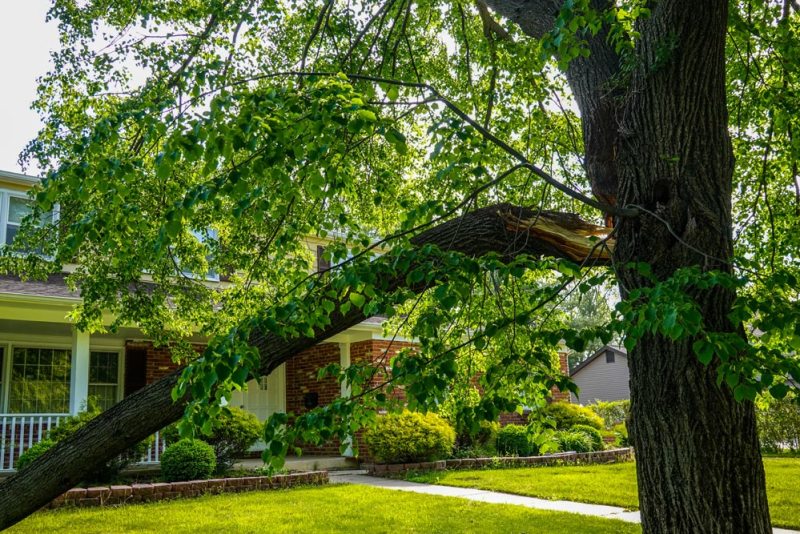
4. Broken, Bent, or Hanging Limbs
This one may be more obvious, but it is still worth mentioning. Ice, wind, and winter storms can leave branches cracked, hanging, and bent into positions they may not recover from. Clemson warns that snow and ice damage can break branches and that hidden internal damage may not show up until dieback becomes visible in spring.
What to do now:
- Stay out from under damaged limbs.
- Do not try to shake ice-damaged branches loose or make risky cuts from a ladder.
- If a broken limb is near the roof, power lines, driveway, or street, treat it like a safety issue, not a weekend project.
If winter damage has already turned into a cleanup issue, this resource may help:
Storm Cleanup Services in South Carolina
5. A Thin Canopy or Delayed Spring Growth
Sometimes winter tree damage is less dramatic. The tree might leaf out, but the canopy may still look sparse. Leaves may be smaller than usual. Growth may be late. One side might seem weaker than the other. Clemson’s tree decline guidance notes that late spring leaf development, smaller foliage, and branch dieback can be signs of a stressed tree in decline, and winter temperature swings are one of the stresses that can contribute to those problems.
What to do now:
- Compare the tree to how it looked last year, not just to the tree next door.
- Pay attention to one-sided dieback, thinning, or delayed leaf-out.
- If the tree is already stressed from age, drought, or construction, winter may have been the final push that exposed the problem.
What Not to Do After Winter Damage
When a tree looks rough in spring, it is tempting to start cutting right away. That is not always the best move. Clemson specifically advises giving trees time so the full extent of winter damage can show itself before corrective pruning is done. In other words, don’t panic-prune.
A few good rules:
- Do not top the tree.
- Do not make large cuts just to see if it helps.
- Do not ignore trunk damage near the base.
- Do not assume a tree is fine just because it still has some green on it.
When to Call Tree Dimensions
If you are seeing large dead limbs, trunk cracks, a thinning canopy, or branches hanging over your house, now is the time to get a professional opinion. Some winter-damaged trees recover with smart trimming. Others are better candidates for removal before summer storms expose the weakness in a bigger way.
Helpful next steps:
Winter damage is easy to underestimate because it often shows up late. If something looks off this spring, trust your gut. It is usually better to ask early than wait for the next strong wind to answer the question for you.
